Tianyun Camera (MUSICO) on Tiangong 3: Hong Kong’s Breakthrough Point‑Source
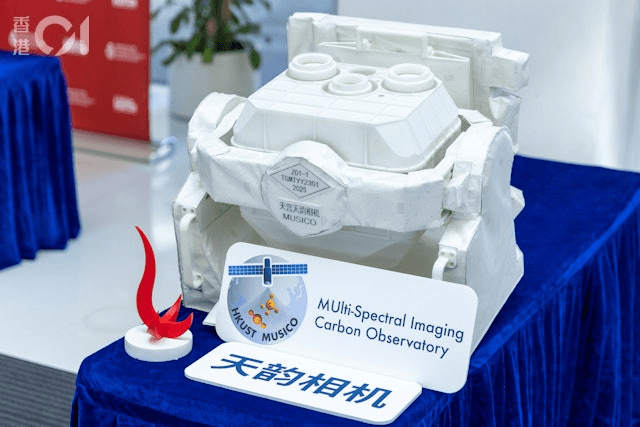
Dong, S. (2026, May 13). Tianzhou-10: HKUST’s “Tianyun Camera” — the first Hong Kong payload to help detect greenhouse-gas emissions reduction. Hong Kong 01. Updated May 13, 2026.
The launch of the world’s first lightweight, high-resolution, high-precision point-source carbon dioxide and methane detector, the “Tianyun Camera” (MUSICO), aboard China’s Tiangong space station marks a transformative development for greenhouse gas monitoring and corporate ESG accountability. Developed by the Hong Kong University of Science and Technology (HKUST) and launched via the Tianzhou-10 cargo spacecraft on May 11, 2026, this payload represents the first Hong Kong‑developed scientific instrument on the national space station. With a footprint smaller than a household washing machine but offering spectral resolution capable of 100‑meter‑level spatial resolution, MUSICO can identify individual emission sources such as power plants and landfills by analyzing solar spectral reflectance changes through the atmosphere. First data are expected to be transmitted to Hong Kong within June 2026, with coverage spanning low‑ to mid‑latitude land and ocean areas. The project was commissioned by the Chinese Academy of Sciences’ Space Application Center, co‑developed with the Changchun Institute of Optics, funded by the Hong Kong SAR Government’s aerospace technology special call, and supported by industry partners including HKUST spin‑off StarWiz Technology and CLP Power, which will use the data for its own emissions assessments.
This development directly links to multiple core ESG frameworks. Under the TCFD and ISSB’s IFRS S2, MUSICO provides independent, asset‑level verification of Scope 1 CO₂ and CH₄ emissions, materially improving transition risk assessment and credibility of climate pledges. For SASB, it directly enables metrics for electric utilities (IF-EU-110a.2) and industrial machinery (RT-IG-410a.1) by offering facility‑level monitoring of fossil fuel combustion and fugitive methane. The instrument advances UN SDGs 9 (innovation), 11 (sustainable cities), 13 (climate action – independent verification), and 17 (data sharing with Belt and Road countries). Under GRI 305, it allows direct measurement of Scope 1 and Scope 2 emissions at source, reducing reliance on default emission factors. Most critically for China, MUSICO directly serves the national “Dual Carbon” goals (carbon peak by 2030, neutrality by 2060) as articulated in the 15th Five‑Year Plan, providing sovereign, high‑trust data that can underpin the expansion of the national carbon market from power to steel, cement, and chemicals.
Looking forward, the implications for investors, regulators, communities, and corporate strategy are profound. For investors and capital markets, MUSICO fills a major data gap: independent, point‑source verification for Chinese and Belt & Road facilities, which previously relied on coarser satellite data (1–7 km resolution) or self‑reports. This enables detection of super‑emitter events, discrepancies between reported and observed emissions, and carbon leakage risks. Companies with under‑reported methane in waste or oil & gas could face valuation adjustments, while green bonds and transition finance can gain credibility from verified facility‑level data. For regulators, China’s Ministry of Ecology and Environment is likely to use MUSICO data to strengthen carbon market compliance, particularly in the Greater Bay Area as a pilot, and to support provincial carbon intensity assessments. Internationally, data sharing with Belt & Road countries aligns with the Paris Agreement’s enhanced transparency framework (Article 13), positioning China as a provider of independent emissions verification for developing nations. For local communities, 100‑meter resolution empowers environmental justice by reducing information asymmetry between emitters (e.g., landfills, petrochemical parks) and affected populations, while methane monitoring directly supports the Global Methane Pledge. For corporate strategy, oil & gas, waste management, and utilities should anticipate heightened scrutiny; proactive use of point‑source data for leak detection and repair or flare optimization will become a competitive differentiator.
Several risks and opportunities emerge. On the risk side, data accessibility remains unclear – if MUSICO data is restricted or non‑public, transparency benefits will be limited. Geopolitical sensitivity could arise from monitoring non‑Chinese facilities, and early data may require robust atmospheric correction validation. Corporate resistance from high‑emitting firms is also possible. However, the opportunities are substantial: if data is openly shared, it could become the largest open‑source point‑source GHG dataset globally. China can leverage this to shape international MRV (Measurement, Reporting, Verification) standards under the UNFCCC, particularly for emerging economies. The space station platform allows instrument upgrades and repairs – unlike traditional satellites – enabling continuous precision improvements. CLP Power’s early collaboration offers a first‑mover benchmark for utility sector credibility in transition finance.
Broadly, MUSICO signals that the era of sole reliance on self‑reported emissions is ending. With point‑source capabilities from China, Europe (CO2M), and commercial players (GHGSat, MethaneSAT), facility‑level independent verification will become baseline by 2030. Tiangong’s long‑term operational model also offers a sustainable alternative to proliferating small satellites, reducing space debris while monitoring planetary boundaries. For Hong Kong, this project repositions the city from a financial center to a deep‑tech ESG data hub, likely attracting venture capital and talent in space‑borne environmental monitoring. Finally, China’s dual‑use narrative – aerospace capability serving public climate goods – reduces friction in international carbon market cooperation and can be extended to ASEAN and African partners under the Belt & Road Green Development initiative.
For corporate decision‑makers and sustainability professionals, immediate actions include mapping high‑emission facilities in low‑to‑mid latitudes against MUSICO’s coverage to prepare for potential data disclosure within 12–18 months. Investors should engage portfolio companies in power, waste, and heavy industry on readiness for satellite‑verified Scope 1 reporting, and incorporate point‑source detection risk into carbon price assumptions (e.g., a $5–10 per tCO2e premium for unverifiable assets). Regulatory teams should monitor China’s Ministry of Ecology and Environment for guidance on using space‑based data in carbon market compliance, likely starting with a Greater Bay Area pilot by 2027. In the long term, MUSICO is the first operational node of a sovereign, high‑resolution GHG monitoring constellation using the space station as a platform. Global ESG will thus see two competing verification regimes – Western commercial and Chinese national – which may ultimately accelerate a UN‑backed transparency framework. The winners will be companies that proactively adopt multi‑source independent verification before regulation mandates it.

Subscribe to us!
Sign up to explore insights and stay connected.


Let's Collaborate!
To provide more relevant information, it would be helpful to clarify the specific context or area.


Our Phone
+(852) 3156 7929
Our Email
Our Address
23/F, Tower 2, Enterprise Square Five, 38 Wang Chiu Road, Kowloon Bay, Kowloon, Hong Kong